
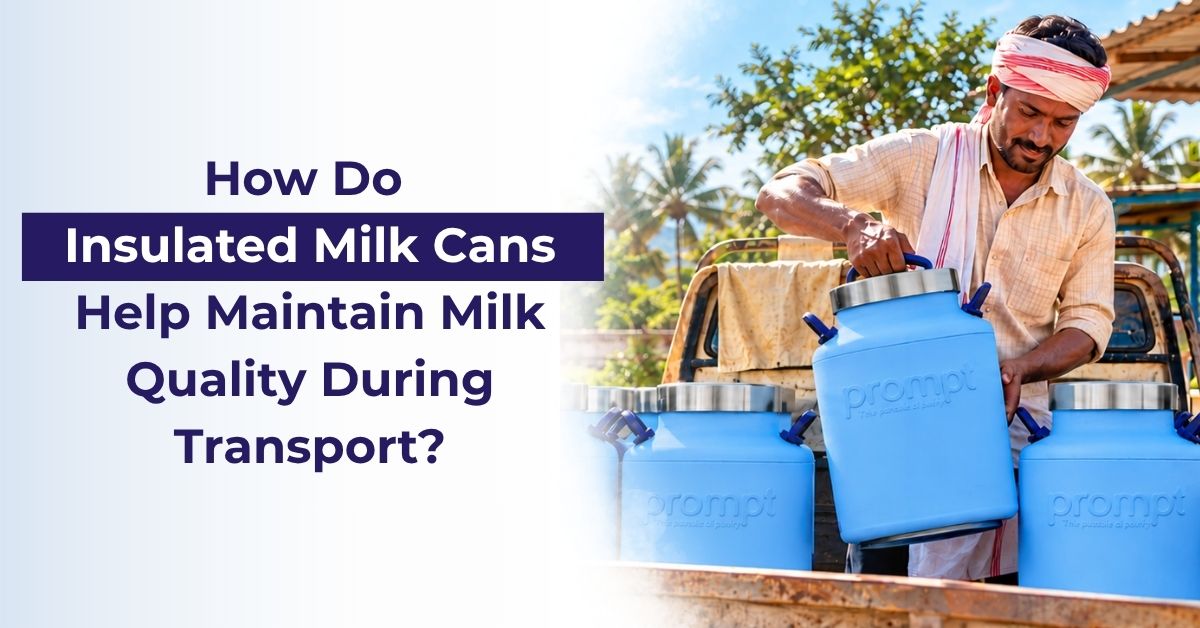
How Do Insulated Milk Cans Help Maintain Milk Quality During Transport?
By 2024, India churned out nearly 239.30 million tonnes of milk, flowing in from the farthest corners of its villages to bustling dairy plants. Ensuring this river of milk stays fresh on its journey calls for a robust and reliable supply chain. While dairies rely on bulk milk chillers along the route, insulated milk cans offer farmers a practical way to keep milk cool and fresh during shorter trips.
What Temperature Must Raw Milk Be Stored At?
After fresh milk is produced on farms, it is transported to village milk collection centres for testing of fat content, solids-not-fat (SNF), added water, and other quality parameters. A significant challenge is that raw milk is highly susceptible to spoilage if not stored under appropriate conditions immediately after milking.
To preserve quality and slow bacterial growth, raw milk should be cooled to approximately 4°C as quickly as possible after milking. This practice preserves freshness and quality, and ensures the milk remains safe for consumption even after pasteurization.
Maintaining the recommended storage temperature is feasible when the collection centre is located nearby. However, when the centre is situated at a greater distance, farmers require effective solutions to preserve the milk’s temperature during transport. That’s why the type of milk can carrying the milk matters.
What are the Different Types of Milk Cans?
Several types of milk cans are available in the market, often categorized by the material from which they are manufactured:
Aluminium Can: These cans are commonly spotted among milk producers who opt for aluminium’s sturdiness and rust resistance. However, they can be prone to denting and chemical sensitivity to detergents used to wash the container. They also risk leaching chemicals when they react with acids or alkalis in the stored milk.
Stainless Steel Can: These cans are slightly heavier than aluminium cans but are corrosion-resistant, easy to clean, and the food-grade variant is chemically and bacteriologically neutral, meaning it will not react with acidic or alkaline milk components.
Insulated Milk Can: This is particularly useful for farmers travelling longer distances to the village milk collection centres or who want to transport their milk in the next collection cycle. Solutions like the Prompt Insulated Milk Can keep the temperature of the milk cool, thus retaining its freshness.
Challenges with Non-insulated Milk Cans
While insulated cans help keep the temperature of the milk constant, non-insulated cans are the ones commonly used by dairy farmers, and they come with their own set of disadvantages:
Temperature Fluctuation: Non-insulated cans cannot shield milk from outside heat, causing the temperature inside to rise above the safe 4°C mark.
Microbial Spoilage: When raw milk stays warm, it becomes an ideal place for bacteria to thrive. These bacteria multiply fast, turning fresh milk sour and spoiling it in no time.
Covering Long Distances: Without chilling facilities, raw milk must travel longer distances, increasing the risk of spoilage compared to milk that reaches a chilling station quickly.
This is why solutions like the Prompt Insulated Milk Can are crucial to keep the milk quality intact even after pasteurization.
How Long Does Milk Last With And Without Insulation?
Raw milk has a short shelf life. Within an hour of production, it is susceptible to rapid bacterial growth because it remains warm at room temperature. Higher temperatures promote microbial growth.
Even when chilled immediately, transporting milk over long distances can still result in quality loss and render it unfit for consumption.
In contrast, milk transported in insulated cans can remain at a safe temperature for longer periods. For example, the Prompt Insulated Milk Can keeps milk fresh for up to 12 hours, reducing the risk of bacterial growth. This allows dairies to collect larger batches in a single trip, improving efficiency for both farmers and dairies.
How Does an Insulated Milk Can Work?
Insulated milk cans have a double-wall barrier, usually made up of stainless steel, with a sealed gap in between. This gap is the thermal barrier, which is crucial for keeping the temperature of the contents intact.
In solutions like the Prompt Insulated Milk Can, the thermal barrier is filled with advanced polyurethane foam insulation that limits temperature rise to within 3°C for up to 12 hours.
Is Getting An Insulated Milk Can Worth It?
To preserve milk quality, producers must keep it consistently chilled until it reaches the processing plant. Although dairies often set up chilling stations along the cold chain, not all producers have access to these facilities. Some farmers may also store evening milk for morning transport to consolidate shipments.
In these situations, insulated milk cans are effective. They support farmers in remote areas and help dairies reduce the number of collection trips.
If you are interested in incorporating Prompt’s innovations into your cold chain, contact our experts to explore available options.
FAQs
An insulated milk can is a specially designed milk container that helps keep the temperature of raw milk constant during storage and transportation.
Raw milk is highly perishable and can experience rapid bacterial growth when exposed to higher temperatures. Maintaining a low temperature helps preserve milk quality, extend freshness, and reduce the risk of spoilage during transport.
The duration depends on factors such as the initial milk temperature, ambient weather conditions, and insulation quality. Advanced insulated milk cans, like the Prompt Insulated Milk Can, can help keep milk fresh for up to 12 hours under suitable operating conditions.
Yes. Many dairy farmers use insulated milk cans to help maintain the quality of evening milk before transporting it to a collection centre during the next collection cycle.
Insulated milk cans help preserve existing milk quality by maintaining a more stable temperature during transport.
